Desarrollo de línea celular

Contenido adicional

Productos para descubrimiento de biomarcadores
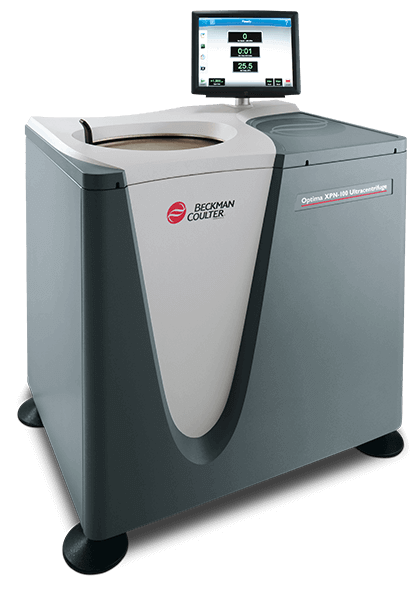
MoFlo Astrios

Descripción
valitatiter igg quantification assay kit val003

ValitaTiter Assays

Rapid, high-throughput IgG quantification in crude cell culture samples

Centrífuga

Descripción
Biomek i-Series Automated Liquid Handlers: Biomek i5 and Biomek i7, Hero Angle

Biomek Seriei

Descripción del producto

Biomek Seriei

Descripción del producto

Access Solutions Systems

Discover a comprehensive suite of high-throughput automation platforms that are easily integrated to meet each critical step of your cell line development workflow.
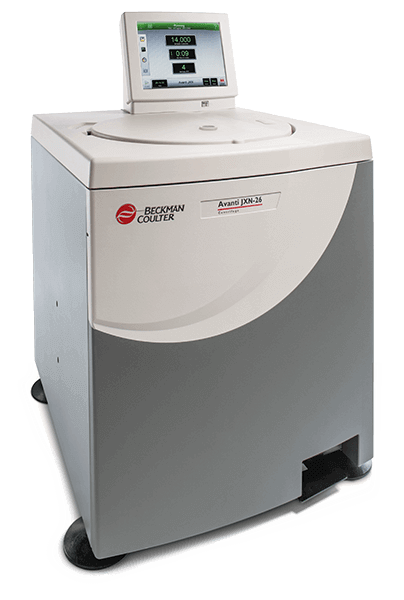
Avanti JXN Series

High performance centrifugation for cell culture harvest and purification optimization
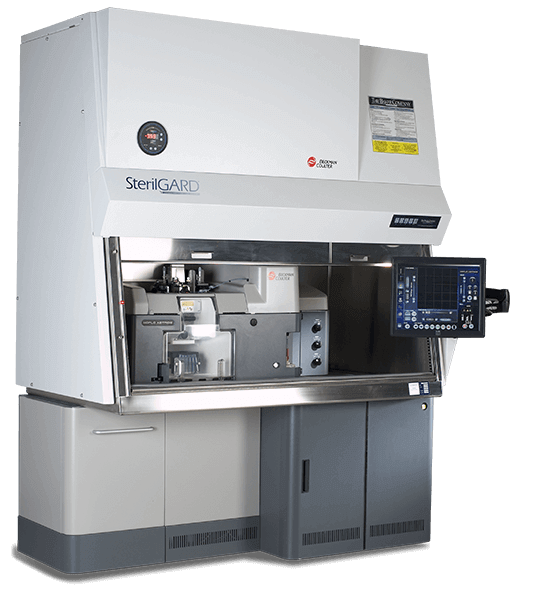
MoFlo Astrios

Descripción
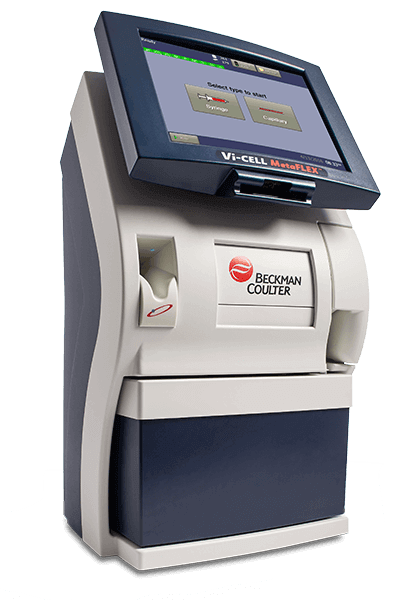
Vi-CELL MetaFLEX

Use the Vi-CELL MetaFLEX for fast bioreactor media analysis

Centrífuga

Descripción

Enlaces útiles

Content and Resources

Efficient Factorial Optimization of Transfection Conditions Nucleic acid transfection is a procedure used in nearly any cellular laboratory and the abundance of commercially available reagents has made this a seemingly simple endeavor. However, whether one is transfecting plasmid DNA or inhibitory RNAs, different cell lines can have significant differences in the ease of transfection or cellular survival. Determining the optimal plating conditions for high transfection efficiency and low cytotoxicity can be highly involved.
Automating Cell Line Development for Biologics Cell line development is a highly-involved, multi-week workflow that involves the plating, screening, and expansion of single cell-derived clones to establish a protein-expression cell line. This complex process required significant throughput of sterile cell manipulations, long-term incubations, centrifugation, cell counting, monoclonality determination and growth tracking, and protein production assessment.
Method for Determining Cell Type Parameter Adjustment to Match Legacy Vi CELL XR This application note details how you can use the plate loader feature on the Vi-CELL BLU to match cell types to give cell counts and viability levels equivalent to those obtained on existing Vi-CELL XR instruments.
Considerations of Cell Counting Analysis when using Different Types of Cells This paper reviews several different cell types and cell preparation approaches using standard cells, such as, CHO cells, EL4 cells, SF9 cells, and HELA cell cultures.
Cell Line Development – Limiting Dilution Limiting dilution is a traditional approach to achieve monoclonality. It entails diluting cells to the level that there is one cell on average per unit of volume plated in the wells. However, as predicted by the Poisson distribution, roughly one third of the plated wells will have zero cells, one third of wells will have a single cell, and one third will have multiple cells per well (Coller and Coller 1986).