
Microbioreactors
Beckman Coulter Life Sciences’ microbioreactors are powerful tools for accelerating microbial strain screening, media optimization, and bioprocess development. By enabling high-throughput, parallel experimentation at small scale, microbioreactor systems help researchers evaluate growth conditions, productivity, and process performance more efficiently than traditional bioreactor workflows.
Modern microbioreactors support real-time monitoring of critical cultivation parameters such as biomass, fluorescence, pH, dissolved oxygen (DO), and other process indicators. These capabilities help laboratories generate high-quality data for microbial fermentation, process optimization, scale-up studies, and early-stage bioprocess development.
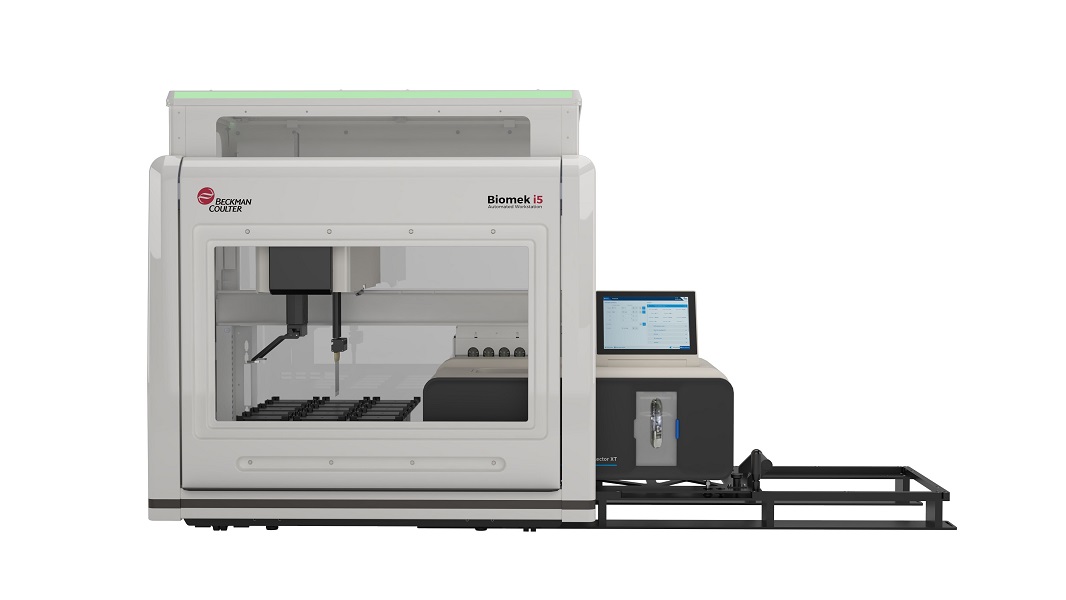
Whether used as stand-alone platforms or integrated with laboratory automation systems, microbioreactors help increase throughput, reduce manual intervention, and support data-driven decision-making across microbial research and bioprocessing applications.
Common Applications for Microbioreactors
- Microbial strain screening
- Media and process optimization
- Small-scale bioreactor studies
- Automated bioprocess development
- Real-time cultivation monitoring
- Scale-up strategy development

FAQ on Microbioreactors
What parameters can be monitored in a microbioreactor?
Depending on the system, microbioreactors can support real-time monitoring of biomass, dissolved oxygen (DO), pH, fluorescence, and other cultivation parameters that are important for microbial growth and process performance.
What is the difference between a microbioreactor and a bioreactor?
A microbioreactor operates at a much smaller scale and is designed for high-throughput experimentation and early process development. Traditional bioreactors are typically used for larger-scale cultivation, middle- to late-stage process development, process validation, and production activities.
What is a microbioreactor?
A microbioreactor is a small-scale bioreactor system that enables researchers to perform high-throughput, parallel cultivation experiments while monitoring key growth and process parameters. Microbioreactors are commonly used for strain screening, media optimization, and bioprocess development.
Why are microbioreactors used in bioprocess development?
Microbioreactors help researchers evaluate multiple process conditions simultaneously, allowing faster optimization of strains, media formulations, and cultivation parameters before scaling up to larger bioreactor systems.
